

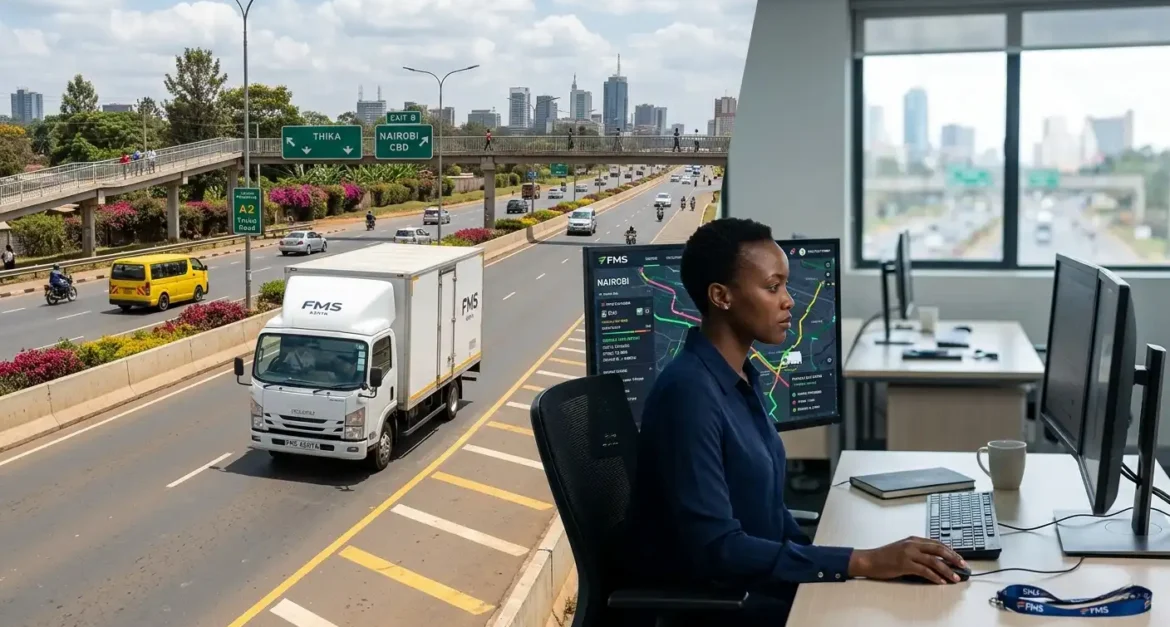
You install a tracking system. You open the dashboard. Every vehicle is visible, moving as expected. So everything is fine… right? That is the assumption many businesses make. But fleet GPS tracking only answers one question. Where is the vehicle?
And in real operations, that is rarely enough.
Because knowing location does not always explain delays, fuel loss, or driver decisions. It shows movement, but not meaning.
Why Fleet GPS Tracking Has Limits
At first, tracking feels like full control. You can see routes, stops, and trip history.
But then the questions begin.
Why did that delivery arrive late?
Why is fuel consumption still high?
Why do some drivers perform better than others?
The system shows the journey, but not the behavior behind it.
This is where many fleets get stuck. They rely on visibility, yet still struggle with the same problems.
It is not because tracking is wrong. It is because it is incomplete.
What Comes After Fleet GPS Tracking
Once you move beyond basic tracking, the picture starts to change.
You begin to understand how vehicles are used, not just where they go.
Driver behavior becomes clear. You can see speeding, harsh braking, and long idling periods. These are the small habits that quietly increase costs.
Patterns also begin to appear. Some routes take longer than expected. Some vehicles are underused. Some drivers are consistently efficient.
At this point, your system shifts from passive tracking to active management.
And that is where real improvement begins.
Turning Data into Daily Action
Having data is one thing. Using it is another.
Many companies collect large amounts of information but never act on it. Reports are generated, then ignored.
But what if that data guided your daily decisions?
Imagine starting your day knowing exactly where attention is needed. Which vehicle requires maintenance. Which route needs adjustment. Which driver needs support.
Instead of reacting to problems, you begin to prevent them.
Fuel use becomes easier to manage. Delays reduce. Operations become more predictable.
And something else happens.
You stop guessing.
The Human Factor in Fleet Performance
Let us be honest for a moment.
How many fleet challenges come down to driver behavior?
A few extra minutes of idling. Slight overspeeding. Taking longer routes out of habit.
Each action seems small. But across multiple vehicles, every day, the impact grows.
With the right system, these patterns are no longer hidden.
Drivers become more aware of their habits. Managers can guide instead of assume. Performance becomes measurable and fair.
Over time, accountability improves without constant supervision.
And that changes how the entire fleet operates.
Building a Smarter Fleet System
If tracking is the starting point, what completes the picture?
A smarter system combines multiple layers of insight.
It connects vehicle data, driver behavior, fuel usage, and maintenance schedules. Instead of looking at each part separately, you see how they influence each other.
For example, poor driving habits may increase fuel use and lead to more frequent maintenance. Without a connected view, this link is easy to miss.
With the right approach, decisions become clearer.
You know what needs attention and why.
A Simple Perspective
Think of fleet GPS tracking like checking a location on a map.
It tells you where something is.
But managing a fleet requires more than that. You need to understand what is happening during the journey and why it matters.
Without that deeper view, you are only seeing part of the story.
Final Thoughts
Fleet GPS tracking is a strong foundation. It brings visibility and structure to operations.
But on its own, it cannot solve every problem.
As fleets grow, challenges become more complex. Costs increase in ways that are not always obvious. Small inefficiencies begin to add up.
This is where businesses need to go further.
Not by replacing tracking, but by building on it.
When you combine visibility with insight and action, the results speak for themselves. Better decisions. Lower costs. More reliable operations.
And perhaps the biggest shift of all.
You move from watching your fleet to truly managing it.