

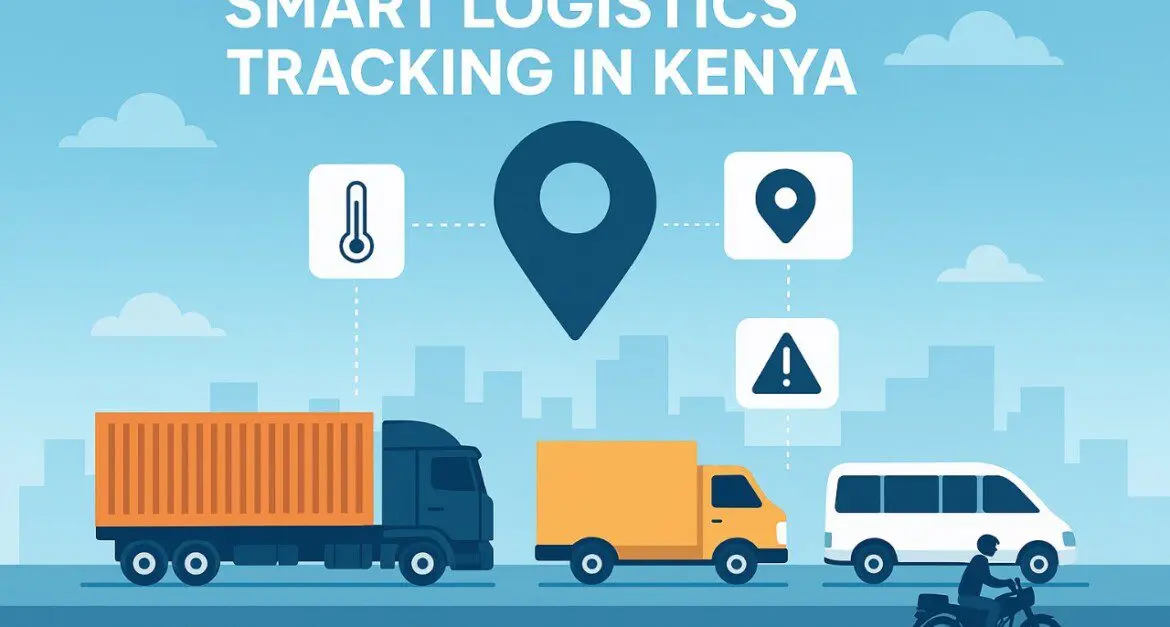
When you think about logistics in Kenya today, one word comes to mind: complexity. Deliveries are moving across Nairobi, Mombasa, and Kisumu every hour of the day. From perishable goods in refrigerated trucks to construction equipment working on remote sites, the demand for smarter movement has never been greater. That is where logistics tracking Kenya steps in.
Why Logistics Tracking Matters
Every fleet owner knows the pain of rising fuel costs, driver delays, and lost cargo. What if you could see exactly where your vehicles are, whether they are on schedule, and even the temperature inside a refrigerated truck? With modern Kenya GPS tracking services, that is no longer a dream. It is the daily reality of businesses that have embraced telematics.
Cold Chain Telematics in Kenya
Food distributors, pharmaceutical companies, and fresh produce exporters depend heavily on cold chain efficiency. Imagine a truck full of fresh flowers heading to Jomo Kenyatta International Airport, only to arrive with spoiled cargo because the cooling system failed.
With cold chain telematics in Kenya, fleet managers can monitor temperature in real time. Systems send instant alerts when the cold storage dips outside the required range. That means drivers can act fast and avoid costly spoilage. It is not just about saving money. It is about maintaining trust with customers and meeting international quality standards.
Construction Fleet Telematics in Kenya
The construction industry is booming, from road networks in Mombasa to housing projects in Nairobi. Yet, managing heavy machinery and trucks on these projects can be overwhelming. Equipment often goes idle, fuel consumption is high, and theft is a constant risk.
Here is where construction fleet telematics in Kenya becomes a game-changer. GPS tracking allows project managers to monitor each machine, track fuel use, and prevent unauthorized operation. For contractors, this means better project planning and fewer losses.
School Bus Tracking in Kenya
Parents across Nairobi and Kisumu worry about the safety of their children on school buses. Was the bus on time? Did it take the right route? With school bus tracking in Kenya, those questions finally get clear answers.
Schools can provide parents with real-time updates, improve safety, and cut down on miscommunication. For administrators, it also means better accountability of drivers and reduced fuel waste.
Motorbike and Tuk-Tuk Tracking in Kenya
Not all fleets are made up of trucks and buses. In fact, motorbikes and tuk-tuks form a huge part of daily logistics across East Africa. From last-mile e-commerce deliveries in Nairobi to tuk-tuk rides in Mombasa, tracking smaller vehicles matters too.
Motorbike and tuk-tuk tracking in Kenya helps operators improve delivery times, cut unnecessary mileage, and reduce theft. For courier companies, it means more accurate ETAs and happier customers.
Regional Growth: East Africa Fleet Monitoring
The story does not stop at Kenya. Businesses across Uganda, Tanzania, and Rwanda are also investing in smarter movement. East Africa fleet monitoring offers companies a regional perspective. A transporter moving goods from Mombasa port to Kigali needs visibility across the entire route, not just within Kenyan borders.
This is where cross-border telematics and East Africa vehicle tracking provide value. They ensure compliance, reduce downtime at checkpoints, and create smoother trade routes for regional growth.
Fleet Tracking Nairobi and Vehicle Tracking Mombasa
Zooming into specific cities, the demand is clear. In Nairobi, companies are investing in fleet tracking to manage rising traffic congestion and ensure deliveries stay on schedule. In Mombasa, where the port serves as East Africa’s main entry point, vehicle tracking is critical for container transport, reducing delays and curbing theft.
Together, these urban centers showcase how telematics is shaping Kenya’s logistics landscape.
The Bigger Picture: Data-Driven Logistics
The real power of these systems is not only about “where is my vehicle.” It is about data-driven decision making. With detailed reports on routes, fuel use, idle times, and delivery performance, businesses can cut costs and scale with confidence.
For logistics companies, adopting logistics tracking Kenya is no longer optional. It is the difference between competing on guesswork or thriving with precision.
Final Takeaway
From cold chain telematics to school bus tracking, Kenya’s logistics sector is transforming. The tools are here, the benefits are clear, and the regional momentum is strong. Companies that embrace GPS tracking services today will be the leaders of tomorrow.
So, whether you manage trucks in Nairobi, tuk-tuks in Kisumu, or construction fleets across East Africa, the message is simple: tracking is not just about vehicles. It is about control, efficiency, and growth.