

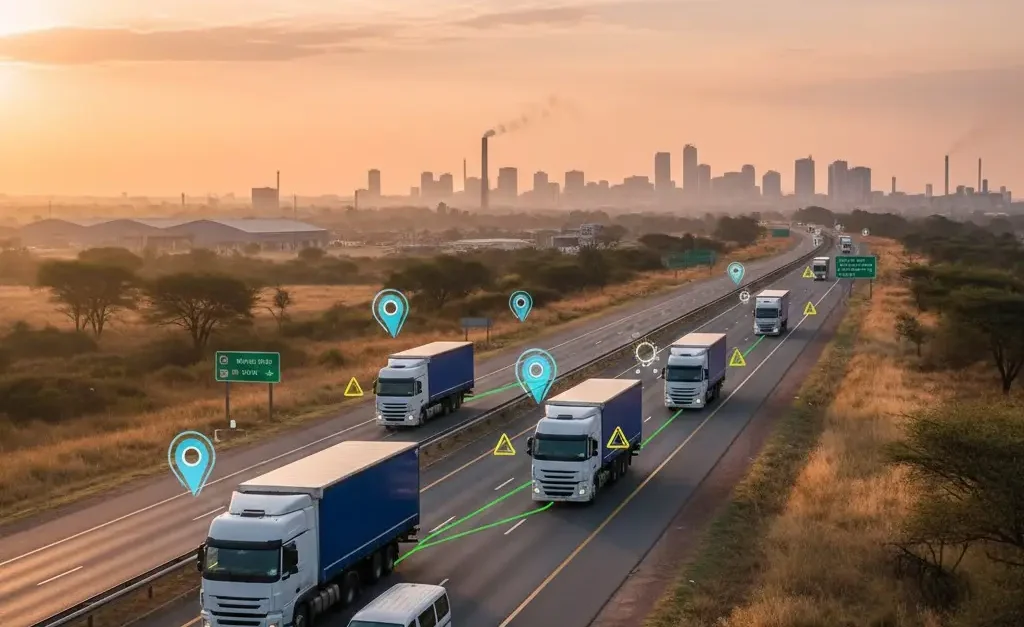
I once spoke to a small fleet owner who told me something that stuck with me. He said the hardest part of running vehicles was not fuel or maintenance. It was not knowing what was happening on the road at any given moment. Have you ever tried to manage something you cannot see? That feeling is exactly why Fleet Visibility is becoming important for transport businesses across East Africa.
Transport today moves fast. Roads are busy. Customers expect updates quickly. At the same time, risks are rising. Theft, route misuse, and unsafe driving can quietly eat into profits. When companies gain clear insight into vehicle movement and activity, decision-making becomes easier and faster. It is not about control for the sake of it. It is about understanding what is really happening day to day.
Why Fleet Visibility Matters in Modern Transport
Many transport companies still rely on phone calls and manual check ins. Drivers call when they arrive. Dispatchers keep notes in books or spreadsheets. But what happens when a phone is off or a driver forgets to report? Small gaps in information can create big problems.
Fleet Visibility allows companies to monitor location, routes, and vehicle status in near real time. This means managers can spot unusual stops, route changes, or delays early. Instead of reacting hours later, they can respond almost immediately.
There is also a safety side that many people forget. When companies can see vehicle movement patterns, they can identify risky driving zones or dangerous habits. Over time, this helps build safer driving culture. Think about it. If you knew someone could see harsh braking or speeding trends, would you not drive more carefully?
Another benefit is customer trust. Clients want updates. They want proof that goods are moving safely. When transport companies can provide accurate tracking updates, confidence grows naturally.
How Fleet Visibility Helps Reduce Daily Operational Risk
Risk in transport rarely comes from one big event. It often comes from many small issues that go unnoticed. Extra fuel use here. Unauthorized trips there. Slight route changes that slowly increase costs.
With Fleet Visibility, companies can detect these patterns early. For example, if a vehicle regularly leaves its assigned route, managers can investigate. Maybe it is traffic. Maybe it is driver behavior. Either way, the company now has facts instead of guesses.
There is also cargo protection. In regions where cargo theft is a real concern, knowing where vehicles stop and for how long can help prevent loss. If a vehicle stops in an unusual area, alerts can be triggered. Quick action can make the difference between safe delivery and major loss.
Maintenance planning also improves. When companies understand vehicle usage patterns, servicing can be scheduled based on real usage instead of rough estimates. This helps extend vehicle life and reduce unexpected breakdowns.
Building a Safety Culture Using Fleet Visibility
Technology alone cannot make transport safe. People still make decisions. But good information helps people make better choices. That is where Fleet Visibility supports driver coaching and safety programs.
Managers can review driving trends over time. Are certain drivers speeding more? Are there repeated harsh braking events? These patterns can guide training conversations. Instead of blaming drivers, companies can focus on improvement and support.
There is also emergency response. If a vehicle stops suddenly or sends a distress signal, support teams can react quickly. In remote areas, this can be life saving.
Many companies also find that drivers feel safer knowing someone can locate them if something goes wrong. It creates a sense of backup. It is similar to how we feel safer sharing our location with family during long trips.
The Business Value Beyond Tracking
Some business owners first think tracking is only about location. But the bigger picture is operational clarity. When leaders understand movement patterns, they can plan better routes, improve delivery schedules, and manage resources more wisely.
Fleet Visibility also supports planning during peak seasons. Companies can review past movement data and prepare for busy periods with more confidence. Instead of guessing demand patterns, they rely on real historical trends.
Insurance relationships can also improve. Some insurers view monitored fleets as lower risk. Over time, this can support better policy terms.
Looking Ahead: The Future of Transport Control
Transport in East Africa is growing fast. More goods are moving between cities and across borders. As competition grows, companies that understand their operations deeply will stand out.
Will manual tracking methods keep up with this growth? Probably not. Businesses that invest in better monitoring tools are preparing for a future where speed, safety, and accountability matter more than ever.
At its core, Fleet Visibility is not about watching drivers or vehicles. It is about building confidence. Confidence that goods are safe. Confidence that drivers are supported. Confidence that business decisions are based on real information.
When you think about your own operations, ask yourself a simple question. If something went wrong right now, how quickly would you know? The answer to that question often shows why visibility matters.
Transport has always been about movement. Today, it is also about information. And companies that see clearly often move forward with fewer surprises and stronger results.