



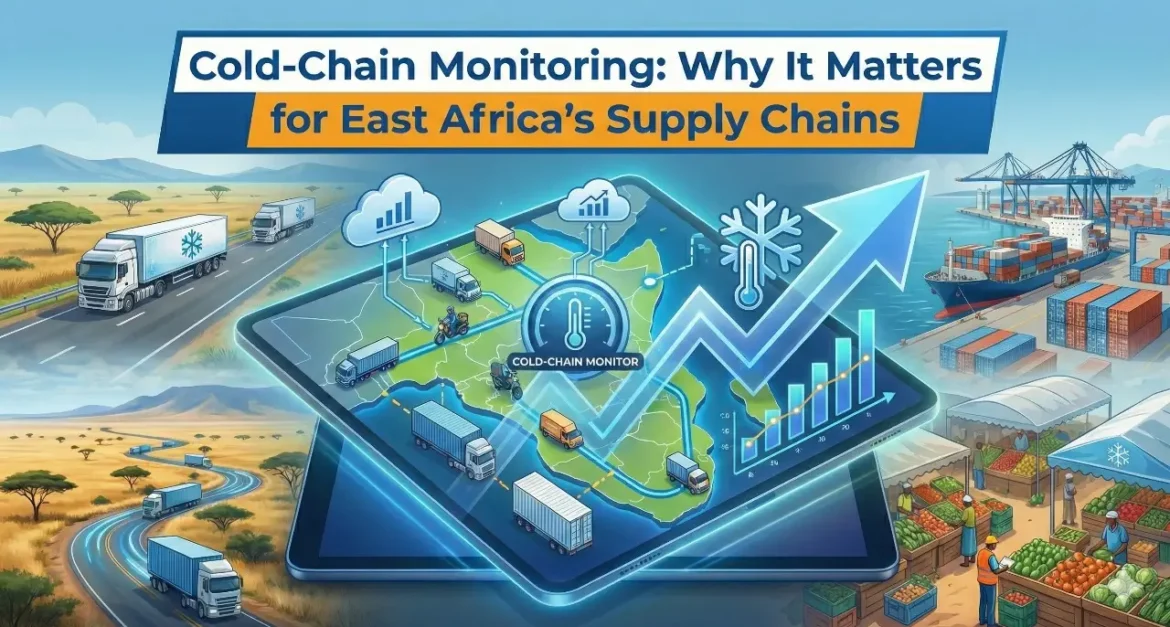
In East Africa, moving perishable goods—like food, medicine, or flowers—across long distances is challenging. Heat, delays, or bad handling can spoil products before they reach customers. That’s where cold‑chain monitoring becomes a lifesaver.
Cold‑chain monitoring means using technology to track temperature, humidity, and location of goods while they move. With real‑time alerts and data logs, businesses can be sure that items stay within safe conditions from start to finish. For companies operating across Kenya and the region, this adds a layer of protection for high‑value or fragile cargo.
Why It’s Important
Perishable goods often lose value quickly if not kept cool or stored properly. For example, medicine can lose potency. Food or flowers rot. In such cases, a small mistake can lead to big losses. Cold‑chain monitoring helps avoid those risks by alerting managers when there’s a problem—say, the refrigeration fails or the cargo is exposed to heat.
It builds trust with clients. Imagine a customer waiting for a load of fresh produce or vaccines. If they get real‑time tracking and confirmation that the goods stayed within safe temperature ranges, they know the business is reliable. That kind of transparency helps businesses grow and keep customers loyal.
Who Benefits
Cold‑chain monitoring works well for many sectors.
- Food producers and distributors sending fresh produce, dairy, meat or fish.
- Pharmacies and medical suppliers transporting temperature‑sensitive drugs or vaccines.
- Flower exporters shipping to global markets.
- Any business moving chemicals or products that spoil or degrade under heat or humidity.
This flexibility means small businesses and large corporations alike can use cold‑chain tracking, depending on their needs.
How It Works in Practice
With a modern system:
- Sensors monitor temperature and humidity inside the container or vehicle.
- GPS tracks location and alerts you if a vehicle takes a wrong turn or stops too long.
- Data is logged and can be reviewed later for quality assurance or audits.
- Alerts notify crews or managers immediately if conditions fall outside safe ranges.
With such systems, companies can reduce waste, avoid spoilage, and meet quality standards consistently.
Why East Africa Needs It
Given the region’s climate—hot and unpredictable—perishable shipments are at high risk. Long distances, rough roads and variable power supply increase the chance of spoilage. Cold‑chain monitoring gives businesses a tool to manage those risks.
As demand for fresh produce, pharmaceuticals, and exports rises, more companies will need reliable cold‑chain systems to stay competitive and deliver on promise.
Final Thought
Cold‑chain monitoring isn’t just a luxury. For many businesses in East Africa, it’s necessary if they care about quality, customer trust and long‑term growth. With it, companies can deliver perishables safely, protect their brand reputation and avoid costly losses.