


I remember once waiting for a matatu that never came. The driver later said the vehicle had broken down on the highway. Everyone was late that day. Now imagine if that was not just one matatu, but twenty delivery trucks, or an entire construction fleet. How much money disappears in moments like that? How many customers lose trust quietly and never say it out loud? This is where Fleet Downtime Reduction becomes more than a technical idea. It becomes a survival strategy for transport and logistics businesses across East Africa. When vehicles stop moving, business stops moving too. Telematics data gives companies the chance to see problems before they become disasters.
Why Fleet Downtime Reduction Matters for Growing Transport Businesses
Many companies think breakdowns are just part of operations. But is that really true anymore? Today, most mechanical failures give warning signs long before the vehicle stops working. The problem is not the vehicle. The problem is missing the signals.
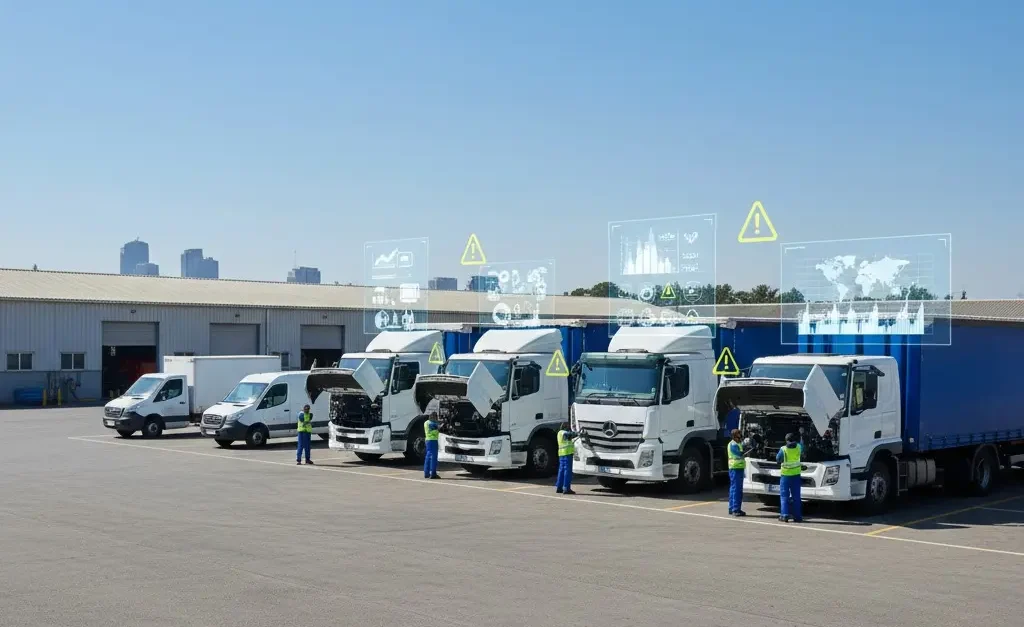
With telematics, fleet managers can monitor engine health, battery voltage, fuel patterns, and driver behavior in real time. Instead of waiting for a driver to call saying, “The truck has stalled,” managers can already see unusual patterns hours or days before failure happens.
This kind of visibility supports Fleet Downtime Reduction by helping teams plan maintenance instead of reacting to emergencies. Scheduled repairs cost less. Emergency roadside repairs cost more and damage customer confidence.
In regions where supply chains depend heavily on road transport, even a single day of downtime can affect farms, factories, and retailers. When transport stops, shelves can stay empty. That creates ripple effects across the economy.
How Telematics Data Supports Downtime Reduction
Telematics systems collect thousands of small data points every minute. On their own, each number may mean little. But together, they tell a story about vehicle health.
For example, rising engine temperature patterns may suggest cooling system problems. Frequent harsh braking may point to driver training gaps or mechanical wear. Fuel usage spikes could signal leaks or theft risks.
Using this data for Fleet Downtime Reduction allows companies to move from guessing to knowing. Instead of asking drivers to describe noises or vibrations, managers see measurable trends.
Maintenance teams can prepare parts in advance. Service appointments can be scheduled during low demand periods. Drivers spend more time driving and less time waiting for repairs.
There is also a safety side. Vehicles that fail while moving can cause accidents. Preventing breakdowns protects drivers, passengers, and other road users. That matters in busy transport corridors where one stalled vehicle can create massive traffic disruption.
Downtime Reduction and Control Room Monitoring
Many telematics providers now support 24 hour monitoring centers. These teams watch live fleet data and flag unusual behavior immediately.
This adds another layer to Fleet Downtime Reduction. Instead of waiting for daily reports, companies get alerts the moment something changes. If a truck battery voltage drops suddenly, the control team can contact the driver before the vehicle fails to start at the next stop.
Think about long distance routes between cities or across borders. A breakdown in a remote area can delay cargo for days. With monitoring support, small issues can be handled early while the vehicle is still near service points.
Control room teams also help companies maintain service consistency. Customers may never see the monitoring dashboards, but they notice when deliveries arrive on time.
Business Impact Beyond Maintenance Costs
Many leaders first look at telematics as a maintenance tool. But the business impact is wider. Consistent operations improve planning accuracy. Warehouses receive goods on schedule. Retailers trust delivery timelines.
Fleet Downtime Reduction also supports driver morale. Drivers prefer vehicles that are reliable and safe. Fewer roadside breakdowns mean less stress and fewer dangerous situations.
Insurance relationships can also improve. Fleets that demonstrate strong maintenance records and monitoring systems often present lower risk profiles.
And there is something else people rarely talk about. Reputation. In logistics, reputation spreads quietly. One late delivery might be forgiven. Repeated delays slowly push clients toward competitors.
The Future of Fleet Downtime Reduction in East Africa
Transport demand across East Africa continues to grow. More goods move daily between cities, ports, and rural production zones. With that growth comes pressure to deliver faster and more reliably.
Telematics will likely become a normal part of fleet operations, not an optional upgrade. Companies that adopt data driven maintenance early often build stronger operational habits. They learn to trust data, plan ahead, and avoid crisis management cycles.
The goal is simple. Keep vehicles moving. Keep drivers safe. Keep customers confident.
When you think about it, every transport business faces the same question. Do you wait for breakdowns, or do you prevent them? The companies that answer that question early often build stronger foundations for long term growth.
Because in transport, movement is everything. And staying ahead of failure is not just good engineering. It is good business.